

Electrical Safety Inspection Checklist: A Complete Homeowner’s Guide

Introduction
Your home’s electrical system works behind the scenes every day, powering everything from lighting and appliances to heating, cooling, and home office equipment. Because most electrical components are hidden behind walls and inside panels, problems can develop gradually without obvious warning signs.
A comprehensive electrical safety inspection checklist helps identify potential hazards before they become expensive repairs or serious safety risks. Whether you’ve recently purchased a home, completed a renovation, or simply want peace of mind, understanding what professional electricians inspect can help you keep your electrical system safe, reliable, and efficient.
In this guide, you’ll learn what a complete electrical safety inspection includes, the most common problems found in residential properties, when to schedule an inspection, and why preventative maintenance is one of the smartest investments homeowners can make.
Why Electrical Safety Inspections Are Important
Electrical problems rarely happen overnight. In many cases, issues develop slowly as wiring ages, electrical loads increase, or components experience normal wear and tear.
Routine inspections help homeowners identify these issues early before they create larger problems.
Some of the biggest benefits include:
- Improving overall household safety
- Reducing the risk of electrical fires
- Identifying overloaded circuits
- Detecting damaged or aging wiring
- Preventing unexpected electrical failures
- Protecting valuable appliances and electronics
- Supporting long-term property value
A professional inspection also provides confidence that your home’s electrical system is operating as intended and can safely support your family’s everyday electrical needs.
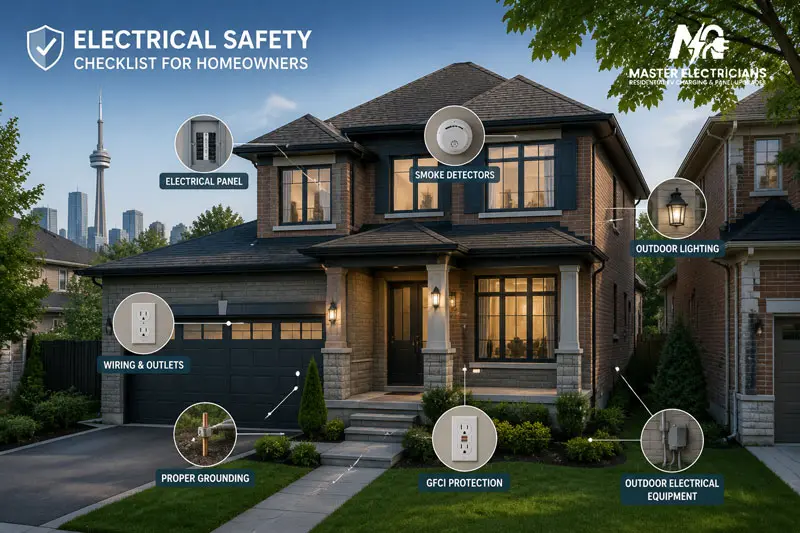
What Does an Electrical Safety Inspection Include?
A licensed electrician follows a structured process to evaluate the safety and condition of your home’s electrical system.
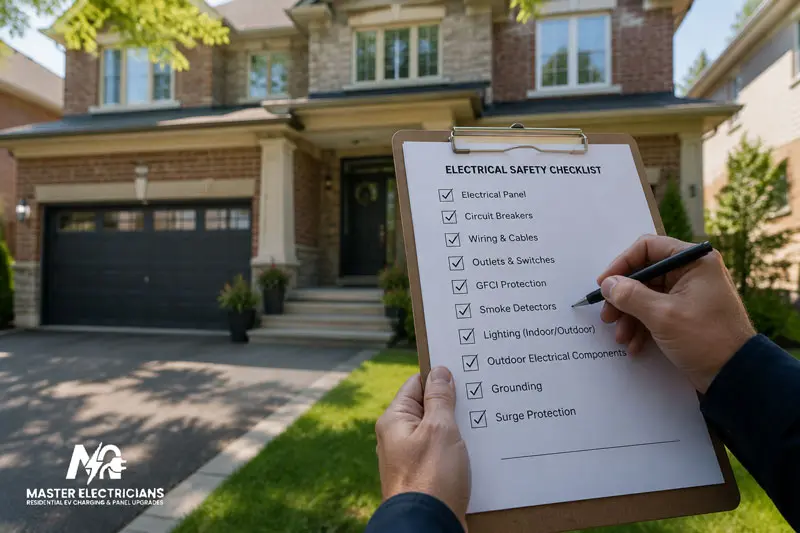
Below is a typical electrical safety inspection checklist used during residential inspections.
1. Electrical Panel Inspection
The electrical panel is the heart of your home’s electrical system.
During an inspection, electricians evaluate:
- Circuit breaker condition
- Proper breaker sizing
- Signs of overheating
- Rust or corrosion
- Loose electrical connections
- Moisture intrusion
- Panel labeling
- Overall panel capacity
An overloaded or aging electrical panel may struggle to meet today’s higher electrical demands, especially in homes with EV chargers, electric heating, or multiple high-powered appliances.
2. Circuit Breakers
Circuit breakers are designed to shut off power when they detect unsafe electrical conditions.
Inspectors check for:
- Breakers that trip frequently
- Signs of overheating
- Damaged breaker handles
- Improper installations
- Double-tapped breakers
- Compatibility with the electrical panel
Proper breaker operation is essential for protecting your home’s wiring.
3. Electrical Wiring
Much of your home’s wiring remains hidden, making professional inspections particularly valuable.
Electricians inspect for:
- Worn insulation
- Loose connections
- Improper splices
- Exposed conductors
- Evidence of overheating
- Damage caused by pests
- Older wiring systems that may require further evaluation
In older homes, wiring conditions can vary significantly depending on previous renovations and maintenance history.

4. Grounding and Bonding
Grounding helps electrical faults travel safely away from people and equipment.
During the inspection, electricians verify:
- Proper grounding connections
- Bonding between electrical systems
- Grounding electrode condition
- Continuity of grounding conductors
Correct grounding improves both electrical safety and system reliability.
5. Outlets and Switches
Every outlet and switch is visually inspected and tested where appropriate.
Common inspection items include:
- Loose receptacles
- Damaged faceplates
- Burn marks
- Incorrect wiring
- Grounding
- GFCI protection
- AFCI protection where applicable
Bathrooms, kitchens, garages, unfinished basements, and outdoor receptacles receive additional attention because these locations are more exposed to moisture.
6. Lighting Fixtures
Lighting inspections help identify problems that are often overlooked.
Electricians check:
- Loose fixtures
- Damaged sockets
- Overheating
- Incorrect bulb wattage
- Proper mounting
- Safe wiring connections
Even minor fixture problems can become larger electrical concerns if ignored.
7. Smoke and Carbon Monoxide Alarms
Although these devices are often viewed separately from the electrical system, their power supply and operation are an important part of overall home safety.
The inspection may include:
- Proper power connections
- Interconnected alarm operation
- Backup battery condition
- Visible damage
Reliable smoke and carbon monoxide alarms provide an additional layer of protection for your household.
8. Outdoor Electrical Equipment
Exterior electrical components are exposed to changing weather conditions throughout the year.
A professional inspection typically includes:
- Outdoor receptacles
- Weatherproof covers
- Exterior lighting
- Garage electrical systems
- Outdoor disconnects
- Visible exterior wiring
For homes throughout Toronto and the Greater Toronto Area (GTA), seasonal rain, snow, freezing temperatures, and summer heat can all contribute to gradual wear on outdoor electrical equipment, making periodic inspections especially worthwhile.
Common Electrical Problems Found During Inspections
Professional electricians frequently discover issues that homeowners may never notice during everyday use.
Some of the most common include:
| Issue | Why It Matters |
|---|---|
| Overloaded circuits | Can lead to overheating and nuisance breaker trips |
| Loose electrical connections | Generate excess heat and reduce reliability |
| Aging electrical panels | May not support modern electrical demand |
| Ungrounded outlets | Increase shock risk |
| Damaged wiring insulation | Creates potential safety hazards |
| DIY electrical work | Often fails to meet accepted installation practices |
| Moisture inside electrical equipment | Can damage components and reduce safety |
Many of these problems can be corrected before they result in larger repairs or unexpected power interruptions.
When Should You Schedule an Electrical Safety Inspection?
While every home benefits from periodic inspections, certain situations make a professional evaluation especially important.
Consider scheduling an inspection if:
- Your home is more than 20–25 years old and hasn’t been inspected recently.
- You’re buying or selling a home.
- You’ve completed a major renovation or home addition.
- You’re installing high-power equipment such as an EV charger or hot tub.
- Circuit breakers trip frequently.
- Lights flicker or dim unexpectedly.
- Outlets or switches feel warm.
- You notice burning odors or buzzing sounds.
- Your insurance provider requests an electrical inspection.
- You simply want peace of mind that your electrical system is operating safely.
Addressing these warning signs early can help prevent more extensive repairs and improve the long-term reliability of your electrical system.
Electrical Safety Tips Every Homeowner Should Follow
Even between professional inspections, there are several simple habits that can improve electrical safety around your home.
Don’t overload outlets
Avoid plugging multiple high-power appliances into the same outlet or power strip.
Test GFCI outlets regularly
Ground Fault Circuit Interrupter (GFCI) outlets should be tested periodically using the built-in test button.
Replace damaged cords
Frayed or damaged extension cords should be replaced rather than repaired.
Keep the electrical panel accessible
Avoid storing boxes or household items directly in front of your electrical panel so it remains easily accessible during emergencies.
Never ignore warning signs
Frequent breaker trips, buzzing sounds, or warm outlets should always be investigated by a qualified electrician.
For additional homeowner electrical safety recommendations, you can also review the guidance provided by the Government of Canada.
Why Professional Electrical Inspections Matter
Although homeowners can identify obvious warning signs, many electrical issues remain hidden behind walls, ceilings, and inside electrical panels.
Professional electricians use specialized testing equipment and industry best practices to evaluate the condition of your electrical system more thoroughly than a visual inspection alone.
While homeowners can perform basic visual checks, it’s also helpful to stay informed using trusted safety resources. The Electrical Safety Authority (ESA) provides educational information and homeowner guidance on electrical safety, helping property owners better understand common electrical hazards and safe practices.
A professional inspection can help identify:
- Hidden wiring defects
- Improper grounding
- Electrical overloads
- Unsafe panel conditions
- Faulty breakers
- Deteriorating connections
- Moisture-related electrical damage
Finding these issues early often reduces repair costs and helps avoid unexpected electrical failures in the future.
Preventative Maintenance Saves Time and Money
Waiting until an electrical problem causes an outage is rarely the most cost-effective approach.
Routine inspections allow small issues to be identified before they develop into larger repairs.
Preventative maintenance can help:
- Extend the lifespan of your electrical system
- Reduce emergency repair costs
- Improve electrical efficiency
- Increase household safety
- Support future home upgrades
- Protect valuable electronic equipment
Like HVAC systems or plumbing, your home’s electrical system performs best when it is inspected and maintained on a regular basis.
Frequently Asked Questions
A professional electrical safety inspection typically includes the electrical panel, circuit breakers, wiring, outlets, switches, grounding, lighting fixtures, smoke alarm power, and exterior electrical components.
The ideal frequency depends on the home’s age, condition, and electrical usage. Older homes, recently renovated properties, and homes adding new high-demand equipment often benefit from more frequent inspections.
You can perform basic visual checks for damaged outlets, exposed wiring, or frequently tripping breakers. However, a complete inspection requires specialized equipment and should be performed by a qualified electrician.
Yes. Installing an EV charger often increases your home’s electrical demand. An inspection helps determine whether your existing electrical panel and circuits can safely support the additional load.
Conclusion
An electrical safety inspection checklist is more than a simple list of items to review—it’s a practical way to help ensure your home’s electrical system remains safe, reliable, and prepared for everyday use.
From inspecting electrical panels and circuit breakers to evaluating wiring, outlets, grounding, and outdoor electrical equipment, regular inspections can identify potential issues before they become costly repairs or safety hazards.
Whether you own an older property or a newer home, investing in preventative electrical maintenance is one of the best ways to protect your family, your property, and your electrical system for years to come.
Areas We Serve
Master Electricians proudly provides professional electrical safety inspections for homeowners and businesses throughout Toronto and the Greater Toronto Area (GTA).
Our service area includes:
Toronto , North York , Scarborough , Etobicoke , Mississauga , Brampton , Vaughan , Markham , Richmond Hill , Oakville , Burlington , Milton , Ajax , Pickering , Whitby , Oshawa , Aurora , Newmarket , Thornhill , Woodbridge , Concord
If you’re located anywhere in the GTA, our licensed electricians are ready to help with professional inspections, electrical troubleshooting, repairs, and system upgrades.
Schedule Your Electrical Safety Inspection Today
Don’t wait for minor electrical issues to become expensive repairs or unexpected safety hazards. If you’re looking for a trusted electrical inspection company serving Toronto and the Greater Toronto Area (GTA), Master Electricians is here to help.
Our licensed electricians provide comprehensive electrical safety inspections, identify potential problems, and recommend practical solutions to keep your home safe and your electrical system performing at its best.
Contact Master Electricians today to request a quote or schedule your professional electrical safety inspection anywhere in Toronto or the GTA.