Do You Need an Electrician to Install an EV Charger?

For a Level 2 home charger in Toronto and the GTA, you need a licensed electrician to install an EV charger. Ontario law says any contractor you hire for electrical work in your home must hold a Licensed Electrical Contractor (LEC) licence. That contractor must also report the work to the Electrical Safety Authority (ESA). The only real exception is a Level 1 charger that plugs into a suitable existing outlet.
Level 1 vs Level 2 EV Charging: What Your Home Needs
Level 1 and Level 2 chargers differ in power, speed, and wiring. This table shows the main differences.
| Feature | Level 1 Charging | Level 2 Charging |
|---|---|---|
| Voltage | 120V (standard household outlet) | 240V (dedicated circuit) |
| Typical amperage | 12A to 15A | 30A to 60A circuit |
| Approximate charging speed | 5 to 8 km of range per hour | 35 to 65+ km of range per hour |
| Electrician needed? | No, if the outlet is in good shape and on a dedicated circuit | Yes, it needs a dedicated circuit and an ESA permit |
Level 1: The Plug-and-Play Option
Every EV comes with a Level 1 connector that plugs into a regular three-prong 120V outlet. You do not need an electrician if the outlet is in good working condition. It should also sit on a circuit without heavy loads, such as a deep freezer or power tools.
Level 1 is slow, though. In a Toronto winter, your EV uses extra energy just to warm the battery. A Level 1 charger may barely replace the range you used on a daily commute.
Level 2: The 240V Upgrade
Most EV owners upgrade to Level 2 to get a full charge overnight. These units need a dedicated 240-volt circuit, similar to the one behind an electric stove or dryer. A Level 2 setup usually involves four steps:
- Calculating your home’s total electrical load to confirm your panel can carry it.
- Installing a double-pole breaker in your main panel.
- Running heavy-gauge copper wire through walls, ceilings, or underground conduit to your parking spot.
- Hardwiring the unit or wiring a heavy-duty receptacle.
Unless you already have an ESA-inspected 240V EV outlet next to your parking spot, you will need professional EV charger installation.
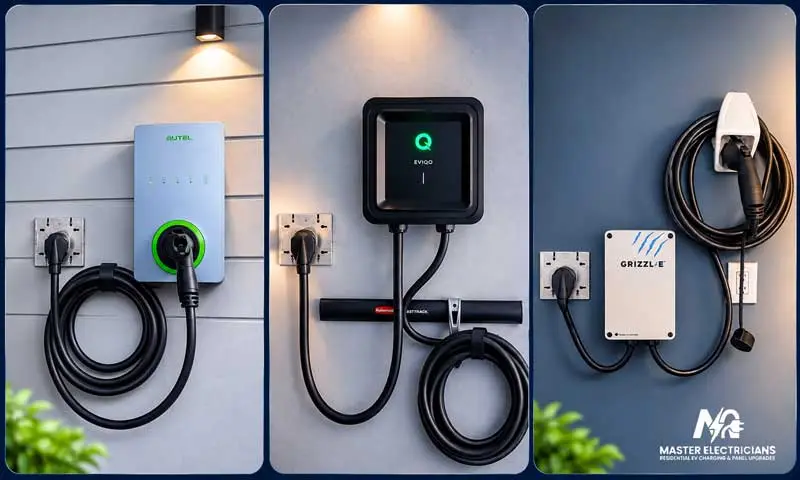
Why EV Charger Installation Requires Electrical Expertise
Load Calculation
A load calculation checks whether your electrical service can handle the charger on top of everything else. That includes the stove, dryer, and heating. An EV charger draws near full power for hours, so code treats it as a continuous load. Code limits that load to 80 percent of the breaker rating. For example, a 40-amp charger needs a 50-amp breaker.
Dedicated Circuit
The Ontario Electrical Safety Code (Rule 86-300) requires the charger to run on its own branch circuit. If it shares a circuit with garage lights or a freezer, those loads compete for the same capacity. That can overheat the wiring or trip the breaker. The one exception is an EV energy management system (EVEMS), which controls the combined load.
Equipment and Location
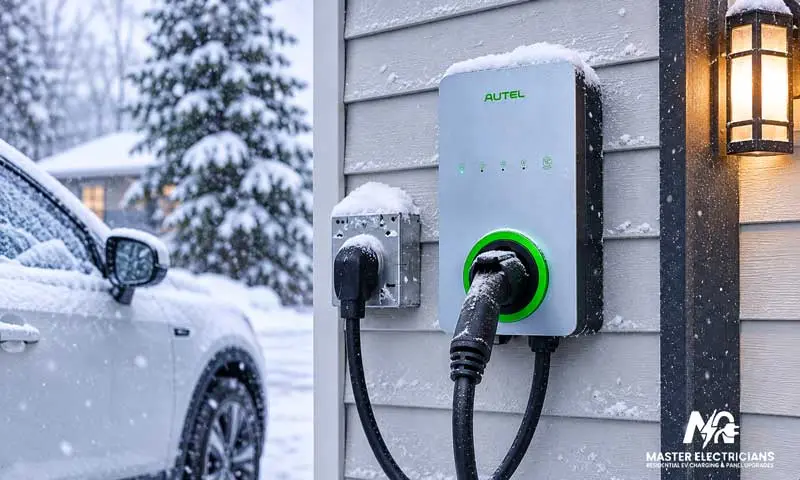
Your charger must carry a recognized certification mark. That mark shows an independent agency has assessed it for safety. For outdoor mounting, choose a unit rated for outdoor use. That matters in Toronto winters with snow, ice, and freezing rain. The breaker, wire gauge, and disconnect must match the charger’s amperage and location. An electrician can also help you pick the best spot in your garage or driveway. This applies whether you install a Tesla charger or another brand.
Electrical Panel Capacity in Toronto and GTA Homes
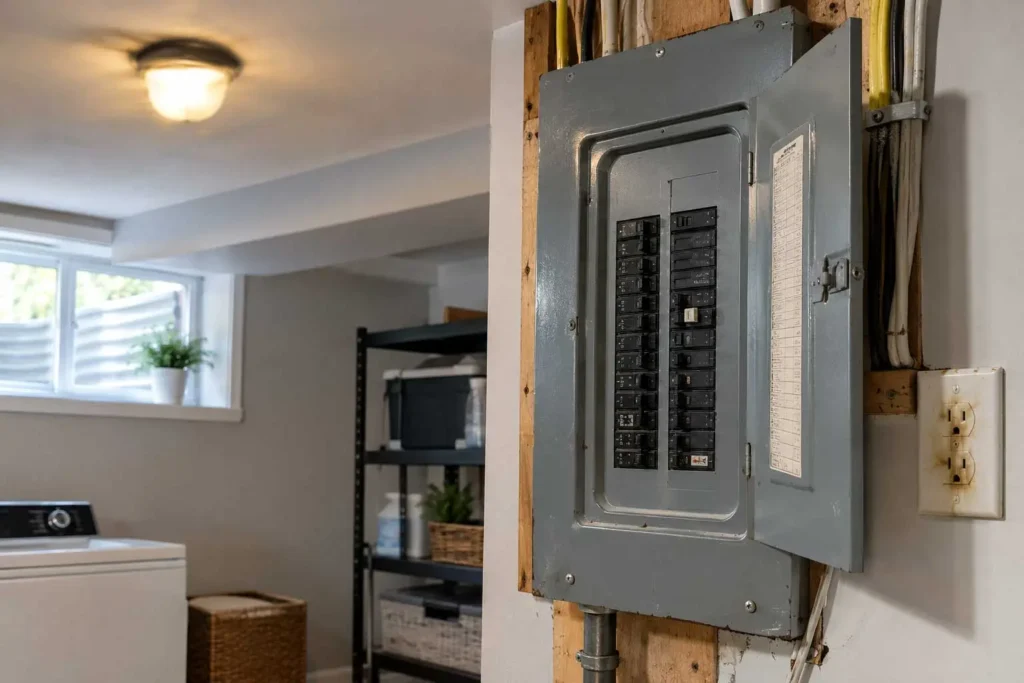
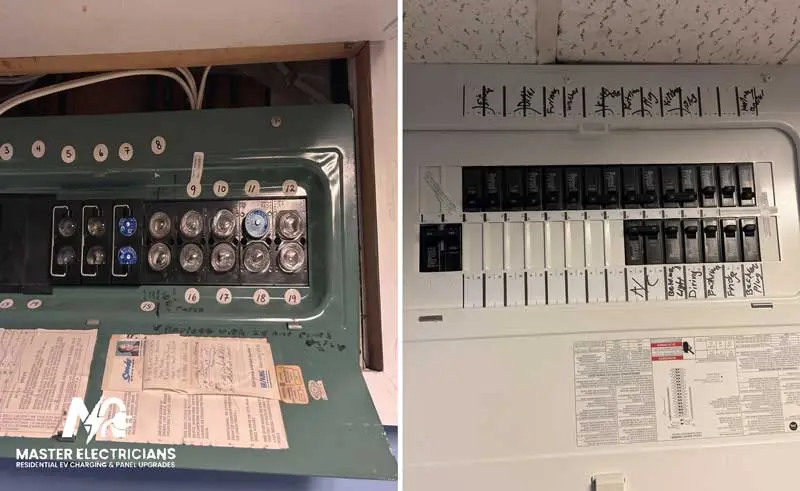
Many older homes in Toronto and the GTA still run on 100-amp panels, and some have even older 60-amp service. Add central air conditioning, an electric stove, a dryer, and perhaps a basement apartment or hot tub. That panel may have little spare capacity. Adding 40 or 50 amps for a car charger can push it past its limit. Your main breaker may then trip the first time someone runs the oven while the car charges.
A good electrician does not just slip a breaker into an empty slot. They calculate your real peak demand first. Then they offer three safe options:
- Direct installation: If your panel has room, the new circuit goes straight in.
- EV energy management system (EVEMS): This smart device monitors your home’s power use in real time. If the stove and air conditioner start together, it pauses the charger until power frees up. An EVEMS can help you avoid a service upgrade on a heavily loaded panel.
- Service upgrade: If you plan to add a heat pump or induction range, an electrical panel upgrade gives your home permanent breathing room. A panel upgrade also involves contacting your local utility.
A licensed contractor can tell you which route the code allows for your home.
Existing 240V Outlets: Proceed With Caution
Some garages already have a 240V outlet from a previous owner who used a welder, air compressor, or old dryer. Many homeowners assume they can plug in a Level 2 charger and start charging. Stop and check first.
The Ontario Electrical Safety Code treats an EV charger as a continuous load. It draws its maximum amperage for hours at a time. A welder or dryer pulls high power only in short bursts. That difference matters, because an old outlet may not suit sustained use. Watch for three common hazards:
- Builder-grade receptacles: A basic outlet built for an electric range can overheat under daily EV charging. EV use calls for a heavy-duty receptacle that handles continuous load.
- Undersized wiring: A circuit built for a 30A compressor cannot safely carry a 40A charger. The wire insulation inside your walls can overheat.
- No ESA record: An outlet installed without a notification leaves no proof that anyone checked it against the code.
An electrician can test the circuit, inspect the wiring, and confirm whether it can support your charger. In many cases, hardwiring the charger is the cleaner option.
Safety Risks of Improper EV Charger Installation
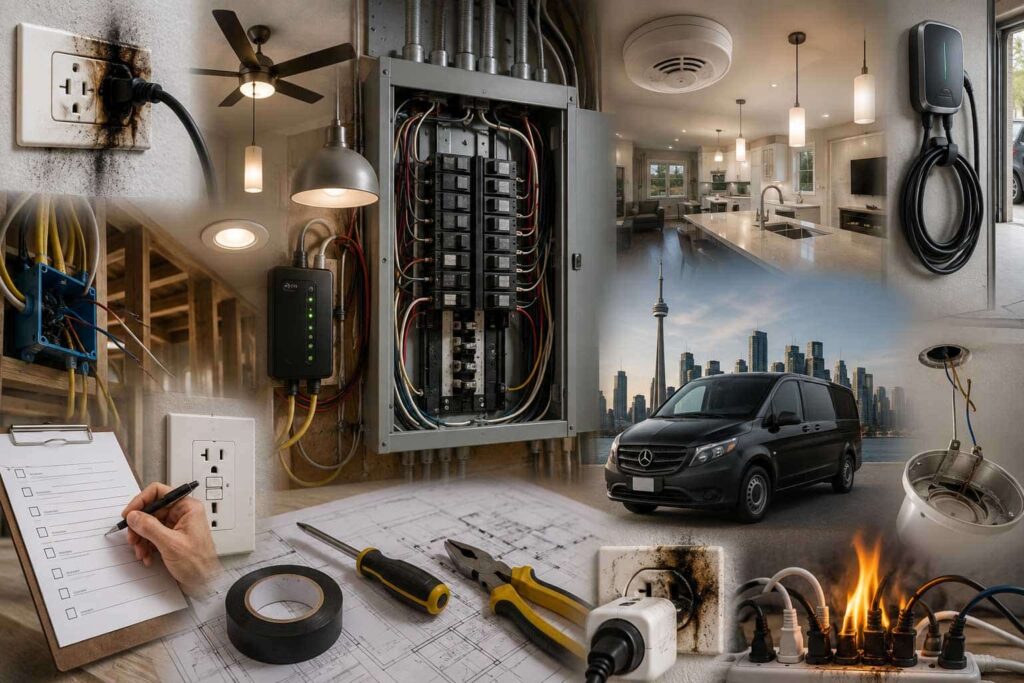
ESA warns that improper installation of an EV charger can start an electrical fire that endangers your family and home. Undersized wire creates heat during hours of continuous charging. A loose connection does the same. Current heats the metal as the charger runs and cools it afterward. Over months, a terminal that was not tightened to the manufacturer’s specification can work loose. That leads to arcing and melted plastic, and the problem may stay hidden until it fails.
During a safety blitz in Toronto, ESA found extension cords running across sidewalks and people mounting chargers on trees. Shock is another concern. Outdoor chargers face rain, snow, and freezing temperatures. Poorly sealed or non-rated equipment can become a shock hazard. Working inside a panel also exposes you to live parts. The utility’s incoming service conductors stay energized even with the main breaker off.
A faulty installation can harm more than the wiring. ESA notes that improper work risks electrical fires and damage to your new EV. The vehicle is often the most expensive thing on the circuit. Unstable connections or an overloaded circuit put stress on both the charger and the car’s charging system.
Permits and Electrical Code Requirements in Ontario
Before the installation starts, someone must file an ESA notification of work, which people commonly call an electrical permit. The person doing the work files it, and you should never take one out for someone else. When you hire a Licensed Electrical Contractor, they file it for you. That filing creates a permanent record of the work and triggers ESA’s review.
A building permit does not cover electrical work, so it cannot replace an ESA notification. In Ontario, a project can need both a building permit and an electrical notification. Different authorities handle each one. For an EV charger, the electrical notification matters most.
The Ontario Electrical Safety Code builds on the Canadian Electrical Code, and your installation must follow it. Section 86 covers EV charging systems, including dedicated circuits, disconnects, and energy management. Section 8 covers the load calculations that decide whether your service is big enough. ESA also publishes bulletins that explain how these rules apply to EV chargers. A working contractor follows them as they change.
The same rules apply in a condo or townhouse. A Licensed Electrical Contractor must install the charger and file the ESA permit. Condos add another layer, because shared electrical rooms and limited building capacity come into play. You typically need the corporation’s approval before work begins. Sorting out approvals and electrical capacity early prevents costly delays.
Why Hire a Licensed Electrician to Install an EV Charger
In Toronto & GTA , the law says you must hire a Licensed Electrical Contractor for electrical work in your home. An LEC holds an ECRA/ESA licence and employs qualified electricians. It also files the notification, so ESA can check the work against the code. You cannot hire individual electricians directly, because they work for or through a licensed contracting business.
Not every contractor advertising online is qualified to touch your panel. Ask these four questions before you book anyone in the GTA:
- “What is your ECRA/ESA licence number?” A licensed business shows its number on its work vehicles and estimates. You can also confirm it with ESA’s Find a Contractor tool.
- “Does this quote include the ESA permit fee?” If a contractor offers a lower cash price without filing a permit, walk away. That shortcut leaves all the responsibility with you.
- “Will you perform a formal load calculation on my panel?” A real professional checks your total service capacity before recommending a 32A, 40A, or 48A charger.
- “Should I hardwire the charger or use a plug-in setup?” The answer depends on your charger and your location. Make sure your contractor can explain the reasons.
For more on what to look for, read our guide on why to hire a licensed electrician.
The benefits go beyond legal compliance. A filed notification leaves a permanent record that ESA reviewed the work against the code. An open notification transfers to the next owner, so an unpermitted charger can become a problem when you sell. Your home insurer may also ask for proof of inspection, and unpermitted work can complicate a claim. Check your charger’s warranty terms too, since some manufacturers require professional installation.
What Happens During Professional EV Charger Installation
The process starts when you contact Master Electricians. We review your project and give you a cost estimate. If the job calls for it, we visit your property before any work begins. The assessment covers your panel, your existing loads, and the best location for the charger. Then the electrician runs the load calculation and decides whether you need a panel upgrade or an EVEMS. They also plan the cable route from the panel to the charger and confirm the charger model and circuit design.
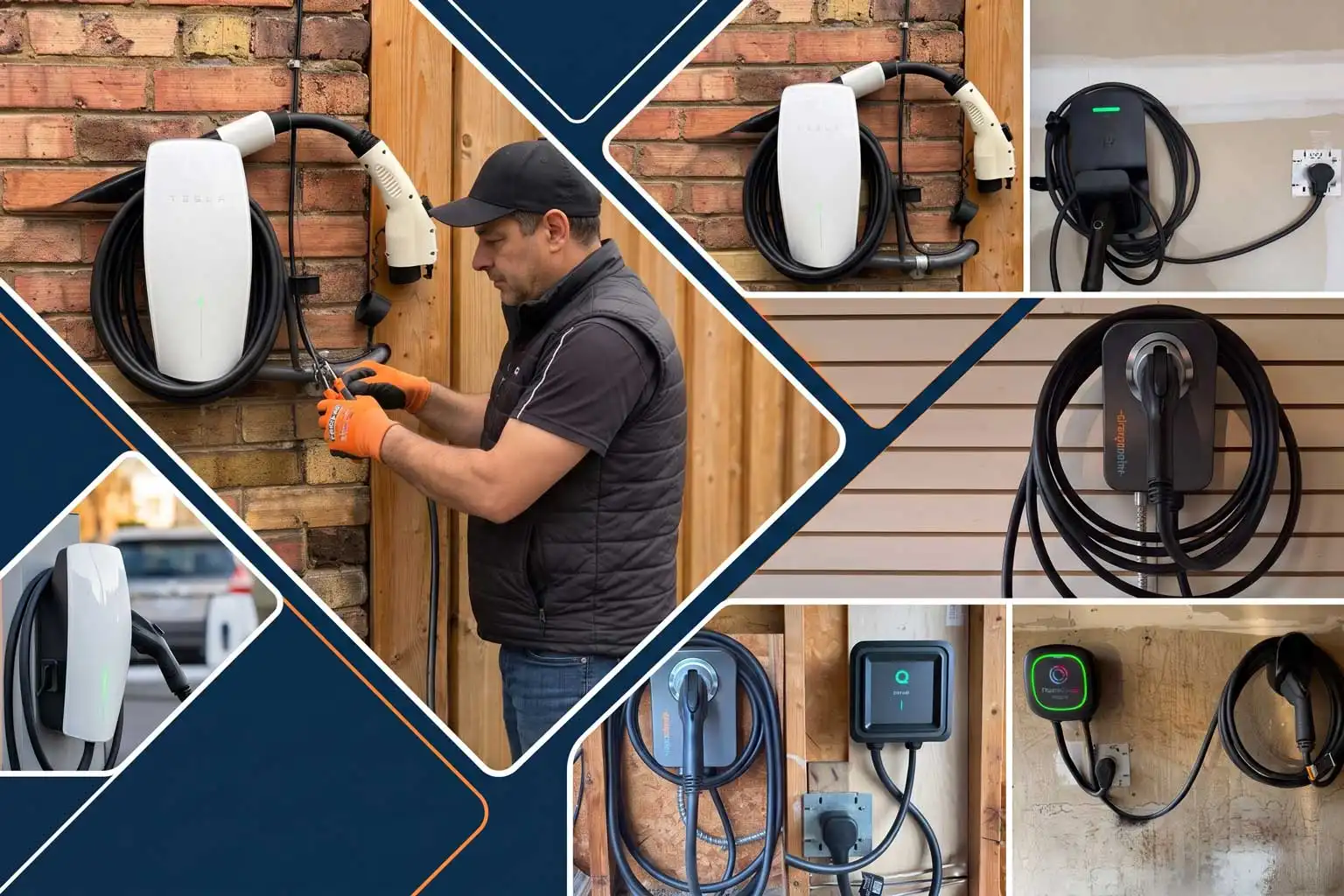
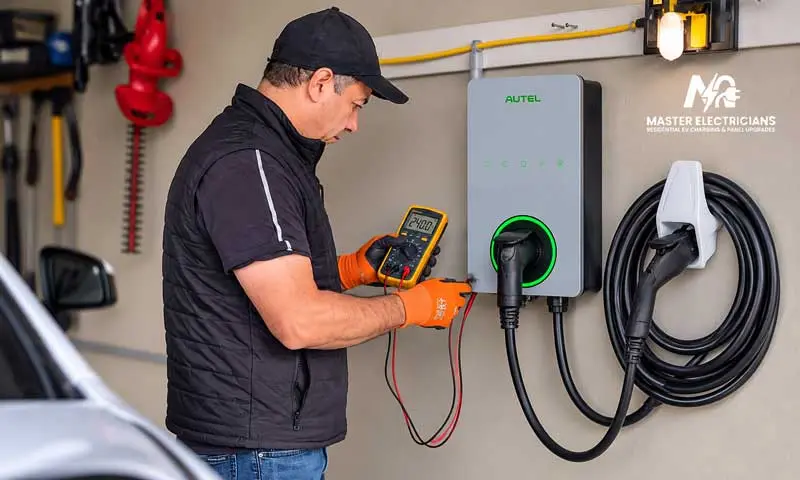
We file the ESA notification before work begins. On installation day, the electrician installs a correctly sized breaker and runs the cable to the charger location. Then they mount the charger. They connect everything to the manufacturer’s specifications and set the charger’s output to match the circuit. Before leaving, they test the system to confirm it charges the vehicle correctly and safely.
When the work is done, ESA inspects the installation. If it meets the Ontario Electrical Safety Code, ESA issues a certificate of acceptance. Ask for a copy for your records, since insurers and future buyers may want to see it.
Hire a Licensed Electrician
For any Level 2 charger in Toronto and the GTA, hire a Licensed Electrical Contractor. Toronto requires it, and the work needs an ESA notification and inspection. The load calculation, dedicated circuit, and code-compliant wiring make a charger safe to run for hours every night. Hiring a licensed professional protects your home, your vehicle, and your ability to prove the job met code.
Ready to charge safely at home?
Master Electricians provides licensed EV charger installation across Toronto and the GTA, including Mississauga, Brampton, Vaughan, Markham, Richmond Hill, Newmarket, and Aurora.Request your free estimate or call416-825-1015.
EV Charger Installation FAQs
No. In Toronto & GTA, you must hire a Licensed Electrical Contractor for electrical work in your home. A handyman, general contractor, or unlicensed individual cannot legally install a 240V EV circuit for you. Hiring one also leaves you without the ESA record and certificate.
Installation time depends mostly on the distance between your panel and your parking spot. A short cable run from a garage panel goes quickly. A long run through a finished basement or outdoor conduit to a detached garage takes more time. Your electrician can give you a realistic timeline during the estimate.
Many electricians prefer hardwiring. A hardwired connection removes the plug and receptacle, which are two common failure points. It also supports higher-amperage chargers than a standard plug-in outlet and suits outdoor Toronto driveways well. Your electrician can recommend the best setup for your charger and location.